Article Sidebar
Main Article Content
Abstract
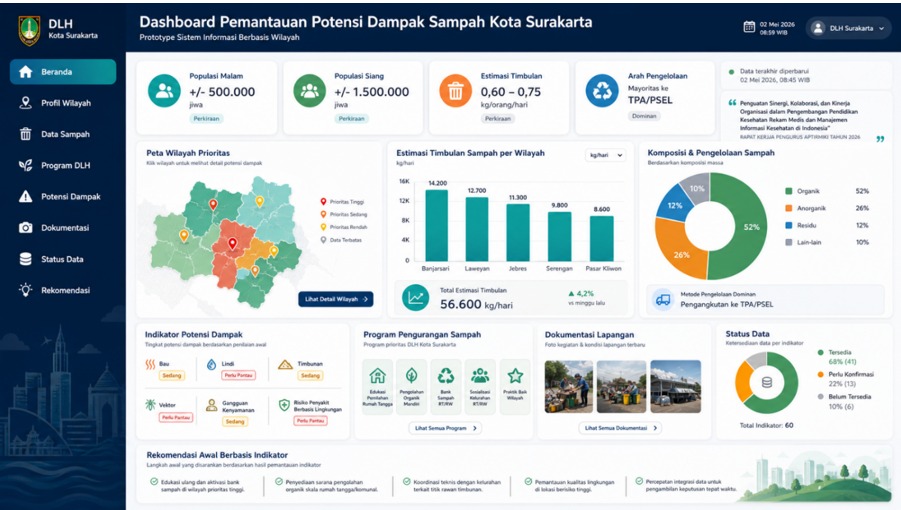
Permasalahan sampah perkotaan memerlukan sistem pemantauan yang mampu menyajikan data wilayah, kondisi pengelolaan, serta potensi dampak lingkungan dan kesehatan secara terintegrasi. Penelitian ini bertujuan mengembangkan dashboard pemantauan dampak sampah berbasis wilayah di Kota Surakarta. Penelitian menggunakan metode penelitian dan pengembangan dengan model ADDIE yang meliputi tahap analysis, design, development, implementation, dan evaluation. Data kebutuhan dikumpulkan melalui wawancara, observasi, dokumentasi, dan telaah data sekunder. Produk dikembangkan dalam bentuk prototipe dashboard yang memuat ringkasan indikator, profil wilayah, sebaran risiko, dampak lingkungan dan kesehatan, program pengelolaan, dokumentasi lapangan, serta rekomendasi wilayah prioritas. Hasil validasi ahli menunjukkan tingkat kelayakan rata-rata 87,0% dengan kategori sangat layak. Uji coba terbatas berbasis skenario menunjukkan sebagian besar tugas pengguna dapat diselesaikan dengan baik dan memperoleh skor usability 82,5. Dashboard yang dikembangkan dinilai dapat membantu penyajian informasi persampahan secara lebih ringkas, terstruktur, dan berorientasi pada pengambilan keputusan, meskipun implementasi operasional masih memerlukan integrasi dengan basis data pemerintah daerah dan pengujian lapangan yang lebih luas.
Keywords
Article Details
Copyright (c) 2026 Wahyu Wijaya Widiyanto, Aisyah Idzaa Amarta, Aficxa Nailatus Sa'adah, Ais Maharani

This work is licensed under a Creative Commons Attribution 4.0 International License.
References
- Abubakar, I. R., Maniruzzaman, K. M., Dano, U. L., AlShihri, F. S., AlShammari, M. S., Ahmed, S. M. S., et al. (2022). Environmental sustainability impacts of solid waste management practices in the Global South. International Journal of Environmental Research and Public Health, 19(19), 12717. https://doi.org/10.3390/ijerph191912717
- Almansour, M. (2024). An environmental assessment of municipal solid waste management. Sustainability, 16(20), 9111. https://doi.org/10.3390/su16209111
- Arbulú, I., Rey-Maquieira, J., & Sastre, F. (2024). The impact of tourism and seasonality on different types of municipal solid waste generation: The case of Ibiza. Heliyon, 10, e33894. https://doi.org/10.1016/j.heliyon.2024.e33894
- Ardiansyah, R. (2025). Strategi pengelolaan sampah di Kota Surakarta dan tantangan pengurangan dari sumber. Journal of Public Policy and Management Review, 14(1), 1-14.
- Barth, L., Schweiger, L., Benedech, R., & Ehrat, M. (2023). From data to value in smart waste management: Optimizing solid waste collection with a digital twin-based decision support system. Decision Analytics Journal, 9, 100347. https://doi.org/10.1016/j.dajour.2023.100347
- BPS Kota Surakarta. (2025). Volume sampah per bulan. Badan Pusat Statistik Kota Surakarta.
- Branch, R. M. (2009). Instructional design: The ADDIE approach. Springer.
- Cárdenas-León, I., Koeva, M., Nourian, P., & Davey, C. (2024). Urban digital twin-based solution using geospatial information for solid waste management. Sustainable Cities and Society, 115, 105798. https://doi.org/10.1016/j.scs.2024.105798
- Fasya, A. H. Z., Sari, D. P., & Prasetyo, B. (2025). A systematic review of solid waste management in Indonesia. Jurnal Kesehatan Lingkungan, 17(2), 101-113.
- Fraternali, P., Morandini, L., & Herrera González, S. L. (2024). Solid waste detection, monitoring and mapping in remote sensing images: A survey. arXiv. https://doi.org/10.48550/arXiv.2402.09066
- Huang, Z., Cui, J., Bor, A., Ma, W., Zhang, Z., & Qiao, Z. (2024). Health risk assessment of municipal solid waste incineration emissions based on regression analysis. Eco-Environment & Health, 3, 338-346.
- Kementerian Lingkungan Hidup/Badan Pengendalian Lingkungan Hidup. (2025). Sistem Informasi Pengelolaan Sampah Nasional: Data timbulan sampah.
- Onur, N., Alan, H., Demirel, H., & Köker, A. R. (2024). Digitalization and digital applications in waste recycling: An integrative review. Sustainability, 16(17), 7379. https://doi.org/10.3390/su16177379
- Pemerintah Kota Surakarta. (2026). Monitoring TPS3R: Pemkot dorong optimalisasi bank sampah dan ekonomi sirkular. Pemerintah Kota Surakarta.
- Pernebayev, Z., Akhmetova, G., & Berdenov, Z. (2026). Environmental impacts of municipal solid waste disposal in urban areas: A systematic review. Sustainability, 18(8), 3900. https://doi.org/10.3390/su18083900
- Ramadan, B. S., Rosmalina, R. T., Syafrudin, Munawir, Khair, H., Rachman, I., & Matsumoto, T. (2023). Potential risks of open waste burning at the household level: A case study of Semarang, Indonesia. Aerosol and Air Quality Research, 23, 220412. https://doi.org/10.4209/aaqr.220412
- Shakeel, S. I., Al Mamun, M., & Haolader, M. F. A. (2023). Instructional design with ADDIE and rapid prototyping for blended learning: Validation and its acceptance in the context of TVET Bangladesh. Education and Information Technologies, 28, 7601-7630. https://doi.org/10.1007/s10639-022-11471-0
- Spatioti, A. G., Kazanidis, I., & Pange, J. (2022). A comparative study of the ADDIE instructional design model in distance education. Information, 13(9), 402. https://doi.org/10.3390/info13090402
- Supratikno, S. I. (2023). Model pengelolaan sampah terpadu di Kota Surakarta. Gema Wiralodra, 14(1), 1-12.
- Vinti, G., Bauza, V., Clasen, T., Medlicott, K., Tudor, T., Zurbrügg, C., & Vaccari, M. (2021). Municipal solid waste management and adverse health outcomes: A systematic review. International Journal of Environmental Research and Public Health, 18(8), 4331. https://doi.org/10.3390/ijerph18084331
- World Bank. (2025). What a waste 3.0: A global snapshot of solid waste management to 2050. World Bank Group.
- Xu, S., Shirowzhan, S., & Sepasgozar, S. M. E. (2023). Urban waste management and prediction through socio-economic values and visualizing the spatiotemporal relationship on an advanced GIS-based dashboard. Sustainability, 15(16), 12208. https://doi.org/10.3390/su151612208
- Yuan, Q., & Zoungrana, M. (2025). Systematic review of environmental and human health risk assessments in municipal solid waste management. Circular Economy and Sustainability. https://doi.org/10.1007/s43621-025-01544-8
References
Abubakar, I. R., Maniruzzaman, K. M., Dano, U. L., AlShihri, F. S., AlShammari, M. S., Ahmed, S. M. S., et al. (2022). Environmental sustainability impacts of solid waste management practices in the Global South. International Journal of Environmental Research and Public Health, 19(19), 12717. https://doi.org/10.3390/ijerph191912717
Almansour, M. (2024). An environmental assessment of municipal solid waste management. Sustainability, 16(20), 9111. https://doi.org/10.3390/su16209111
Arbulú, I., Rey-Maquieira, J., & Sastre, F. (2024). The impact of tourism and seasonality on different types of municipal solid waste generation: The case of Ibiza. Heliyon, 10, e33894. https://doi.org/10.1016/j.heliyon.2024.e33894
Ardiansyah, R. (2025). Strategi pengelolaan sampah di Kota Surakarta dan tantangan pengurangan dari sumber. Journal of Public Policy and Management Review, 14(1), 1-14.
Barth, L., Schweiger, L., Benedech, R., & Ehrat, M. (2023). From data to value in smart waste management: Optimizing solid waste collection with a digital twin-based decision support system. Decision Analytics Journal, 9, 100347. https://doi.org/10.1016/j.dajour.2023.100347
BPS Kota Surakarta. (2025). Volume sampah per bulan. Badan Pusat Statistik Kota Surakarta.
Branch, R. M. (2009). Instructional design: The ADDIE approach. Springer.
Cárdenas-León, I., Koeva, M., Nourian, P., & Davey, C. (2024). Urban digital twin-based solution using geospatial information for solid waste management. Sustainable Cities and Society, 115, 105798. https://doi.org/10.1016/j.scs.2024.105798
Fasya, A. H. Z., Sari, D. P., & Prasetyo, B. (2025). A systematic review of solid waste management in Indonesia. Jurnal Kesehatan Lingkungan, 17(2), 101-113.
Fraternali, P., Morandini, L., & Herrera González, S. L. (2024). Solid waste detection, monitoring and mapping in remote sensing images: A survey. arXiv. https://doi.org/10.48550/arXiv.2402.09066
Huang, Z., Cui, J., Bor, A., Ma, W., Zhang, Z., & Qiao, Z. (2024). Health risk assessment of municipal solid waste incineration emissions based on regression analysis. Eco-Environment & Health, 3, 338-346.
Kementerian Lingkungan Hidup/Badan Pengendalian Lingkungan Hidup. (2025). Sistem Informasi Pengelolaan Sampah Nasional: Data timbulan sampah.
Onur, N., Alan, H., Demirel, H., & Köker, A. R. (2024). Digitalization and digital applications in waste recycling: An integrative review. Sustainability, 16(17), 7379. https://doi.org/10.3390/su16177379
Pemerintah Kota Surakarta. (2026). Monitoring TPS3R: Pemkot dorong optimalisasi bank sampah dan ekonomi sirkular. Pemerintah Kota Surakarta.
Pernebayev, Z., Akhmetova, G., & Berdenov, Z. (2026). Environmental impacts of municipal solid waste disposal in urban areas: A systematic review. Sustainability, 18(8), 3900. https://doi.org/10.3390/su18083900
Ramadan, B. S., Rosmalina, R. T., Syafrudin, Munawir, Khair, H., Rachman, I., & Matsumoto, T. (2023). Potential risks of open waste burning at the household level: A case study of Semarang, Indonesia. Aerosol and Air Quality Research, 23, 220412. https://doi.org/10.4209/aaqr.220412
Shakeel, S. I., Al Mamun, M., & Haolader, M. F. A. (2023). Instructional design with ADDIE and rapid prototyping for blended learning: Validation and its acceptance in the context of TVET Bangladesh. Education and Information Technologies, 28, 7601-7630. https://doi.org/10.1007/s10639-022-11471-0
Spatioti, A. G., Kazanidis, I., & Pange, J. (2022). A comparative study of the ADDIE instructional design model in distance education. Information, 13(9), 402. https://doi.org/10.3390/info13090402
Supratikno, S. I. (2023). Model pengelolaan sampah terpadu di Kota Surakarta. Gema Wiralodra, 14(1), 1-12.
Vinti, G., Bauza, V., Clasen, T., Medlicott, K., Tudor, T., Zurbrügg, C., & Vaccari, M. (2021). Municipal solid waste management and adverse health outcomes: A systematic review. International Journal of Environmental Research and Public Health, 18(8), 4331. https://doi.org/10.3390/ijerph18084331
World Bank. (2025). What a waste 3.0: A global snapshot of solid waste management to 2050. World Bank Group.
Xu, S., Shirowzhan, S., & Sepasgozar, S. M. E. (2023). Urban waste management and prediction through socio-economic values and visualizing the spatiotemporal relationship on an advanced GIS-based dashboard. Sustainability, 15(16), 12208. https://doi.org/10.3390/su151612208
Yuan, Q., & Zoungrana, M. (2025). Systematic review of environmental and human health risk assessments in municipal solid waste management. Circular Economy and Sustainability. https://doi.org/10.1007/s43621-025-01544-8